
EICR for homeowners
An inspection of the wiring in the home you own. Not required by law, but recommended at least every 10 years by the charity Electrical Safety First, and the only way to know whether older wiring is safe rather than guessing.
Registered with NICEIC under the Domestic Installer Scheme since September 2020 Check it on the NICEIC register
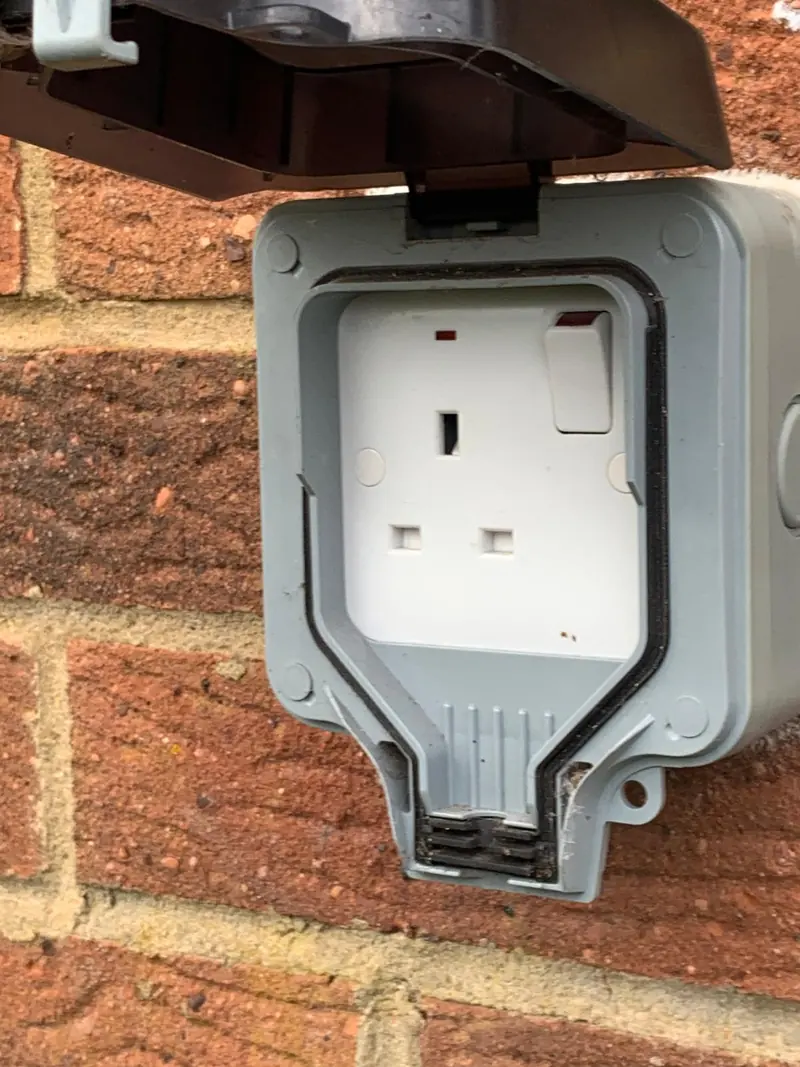
A weatherproof outdoor socket David fitted.
Every 10 years
There is no law saying homeowners must have their electrics checked. The charity Electrical Safety First recommends an inspection at least every 10 years for an owner-occupied home, or sooner if you notice burn marks, buzzing, or fuses and breakers tripping. Old wiring is not automatically unsafe. An inspection tells you whether it is.
Source: Electrical Safety First
Other good moments
Before buying or selling a lived-in home, after a flood or a fire, before an extension or a new kitchen goes on to an old installation, and when you cannot remember the last time anyone looked.
Warning signs
Five things worth an inspection sooner than 10 years, and what the inspection does about each.
| Sign | What it looks like | What the inspection checks |
|---|---|---|
| Burn marks or a hot smell | Scorching round a socket or a switch, or a plastic smell near the board. | Every accessory sampled is opened; the connections behind it are checked. |
| Buzzing or crackling | A noise from a socket, a switch or the consumer unit. | Loose or failing connections show up on inspection and in the test readings. |
| Breakers or fuses tripping | A circuit that goes off with no obvious cause, or keeps going off. | Insulation resistance testing finds faults between conductors. |
| No RCD on the board | No button marked T or Test on the fuse board. | The report records where RCD protection is missing and codes it. |
| An old board | A wooden back, rewireable fuses, or a board that has not changed in decades. | The board and the earthing arrangement are the first things looked at. |
Old wiring, tested
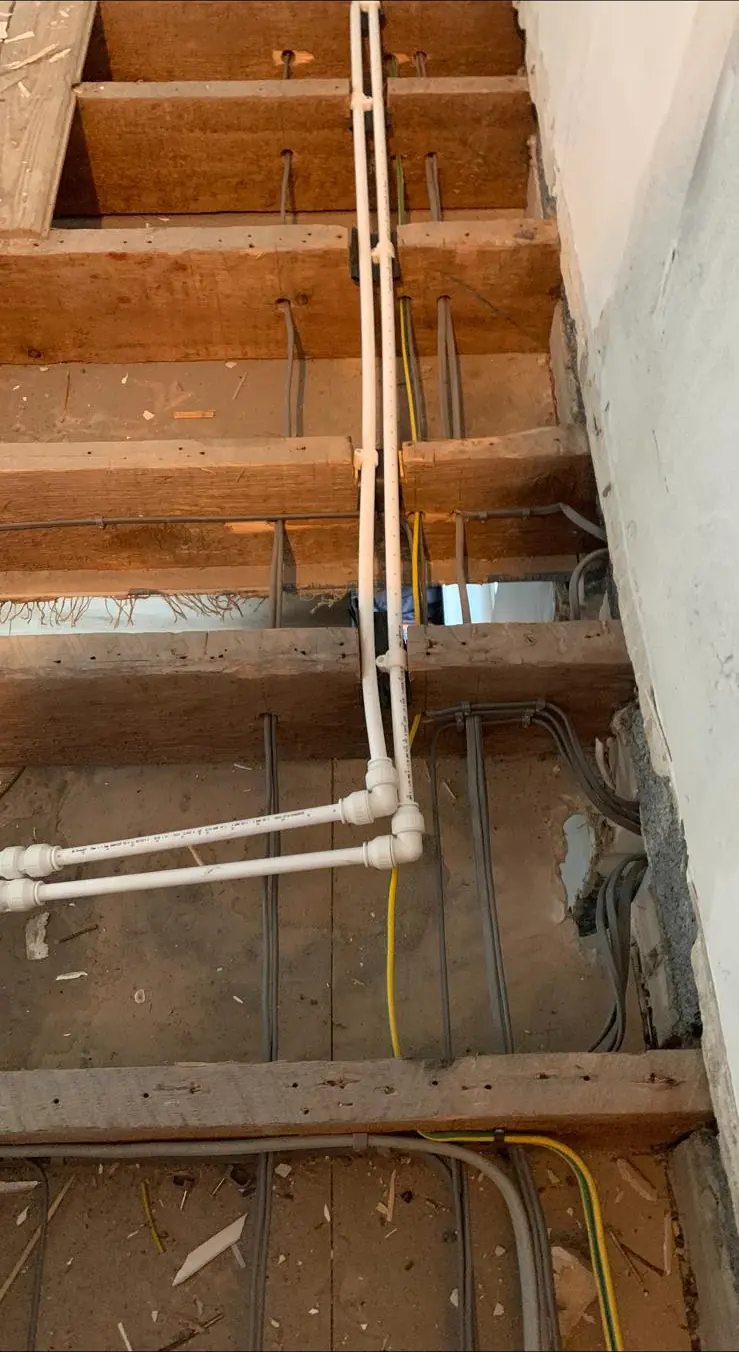
The fear with an older house is that the wiring is a fire waiting to happen, and the temptation is either to ignore it or to assume the whole lot has to come out. Neither is based on anything. Cable that went in forty years ago can still test perfectly well, and cable that went in ten years ago can have been damaged by the plasterer, the kitchen fitter or a nail through a floorboard. The test is what separates the two. Insulation resistance readings show whether the insulation between the conductors is still doing its job; continuity readings show whether the protective conductor runs unbroken back to the board; the earth fault loop reading shows whether a fault would clear quickly enough. The board itself says a lot: whether there is RCD protection, whether the devices suit the cables they protect, whether the main earth and the bonding to the gas and water pipes are there. What comes out of it is not a verdict on the age of the house but a coded list, and very often the answer to an old installation is a new consumer unit and some remedial work rather than a rewire.
Homeowner questions
Is an EICR a legal requirement for a homeowner?
No. There is no law saying homeowners must have their electrics checked.
My wiring is old. Does it need replacing?
Not necessarily. Electrical Safety First says there are no set guidelines on when a property should be rewired, and old wiring is not automatically unsafe. An inspection tells you whether it is.
Can an inspection find everything?
It finds what it can reach. Cables buried in walls and under floors are tested from their ends; anything that could not be inspected is written into the report as a limitation.