
EV charger installation
Home EV chargers fitted by David across Dartford, Gravesend, Bexley and north Kent: the charger on the wall, a dedicated circuit with its own protection behind it, the cable run neatly, and the work notified to Building Control.
Registered with NICEIC under the Domestic Installer Scheme since September 2020 Check it on the NICEIC register
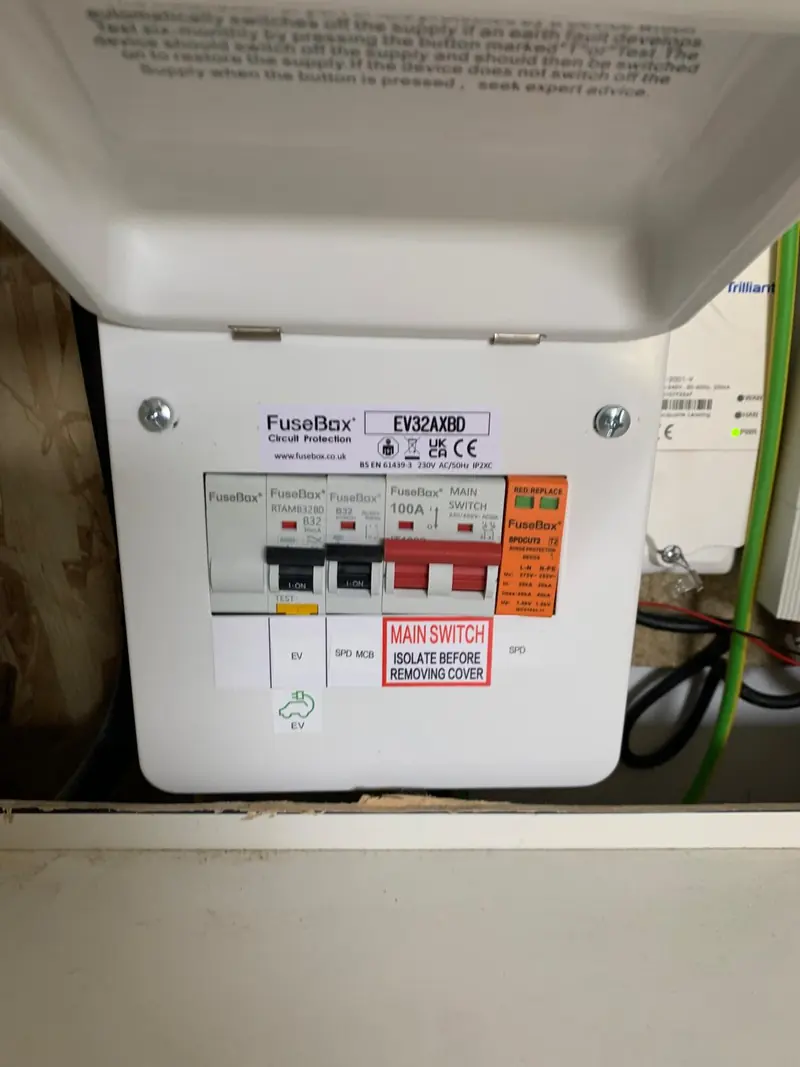
The dedicated supply board behind one of David’s chargers: the part nobody photographs.
Seven chargers, seven walls
Every one of these is David’s own work, photographed on the day. Swipe or use the arrows. The board at the top of this page is what sits behind a charger like these.
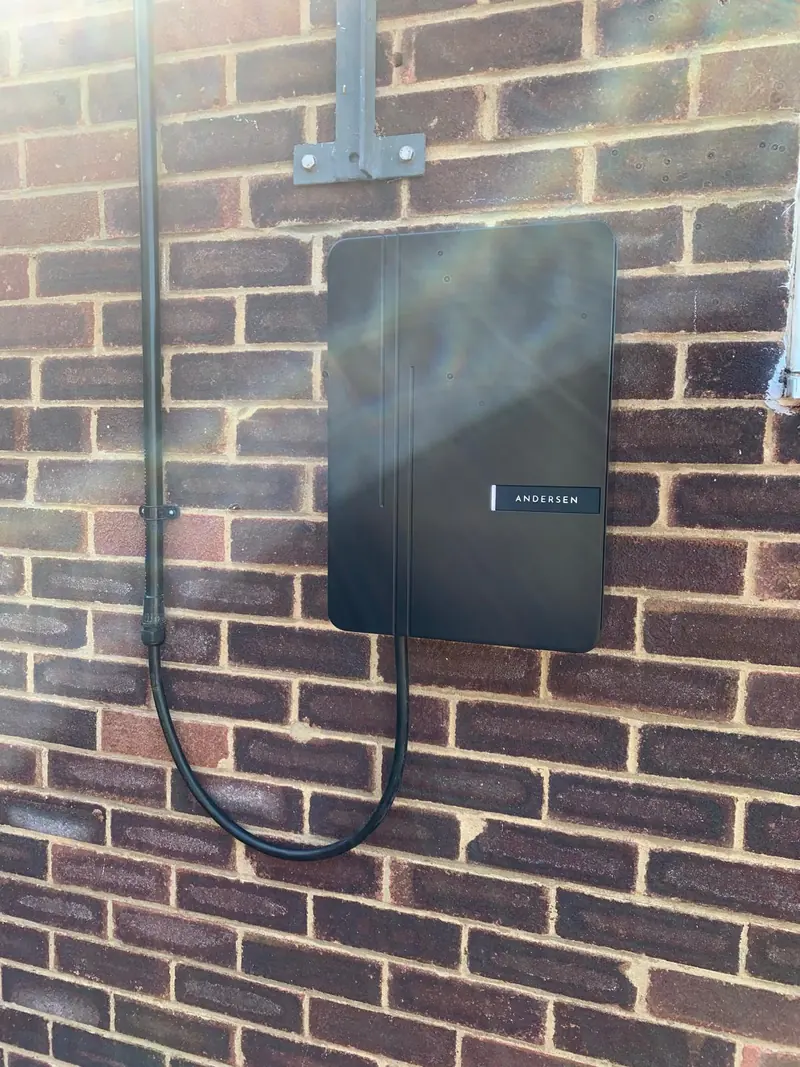
Engineering brick, supply in conduit from aboveAndersen
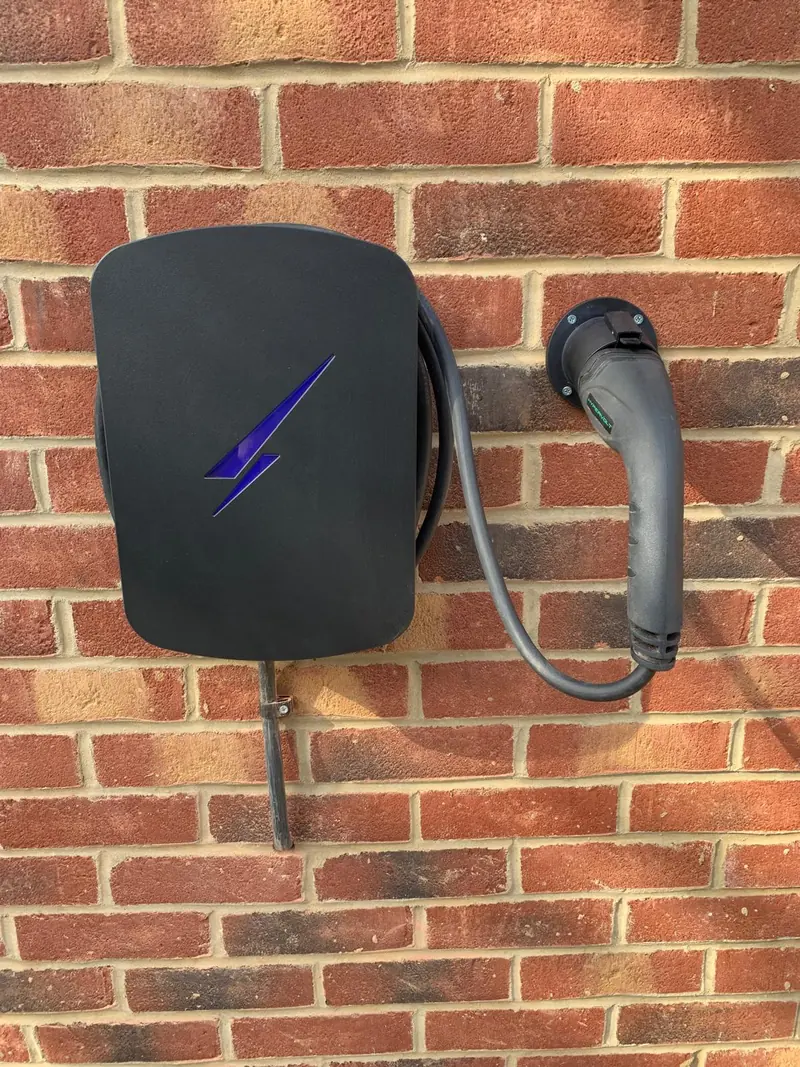
Red brick, tethered cable
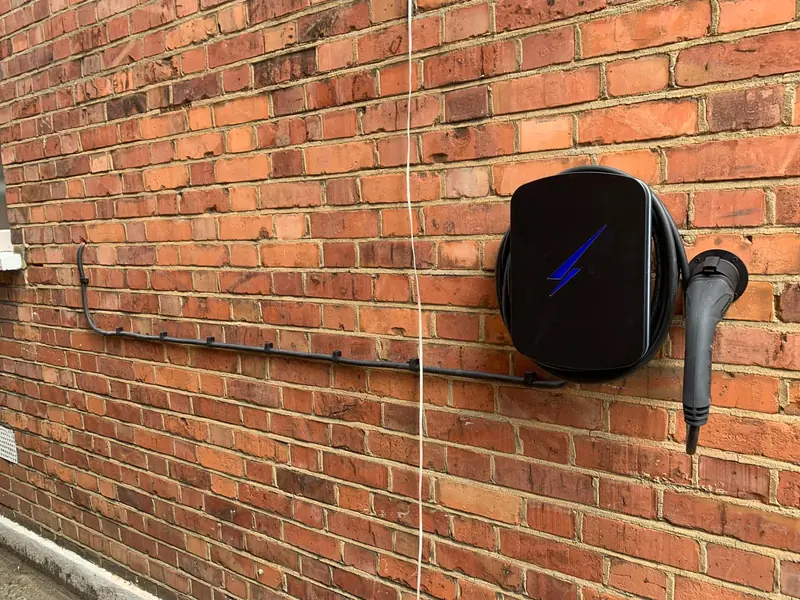
Brick, cable clipped along the wall
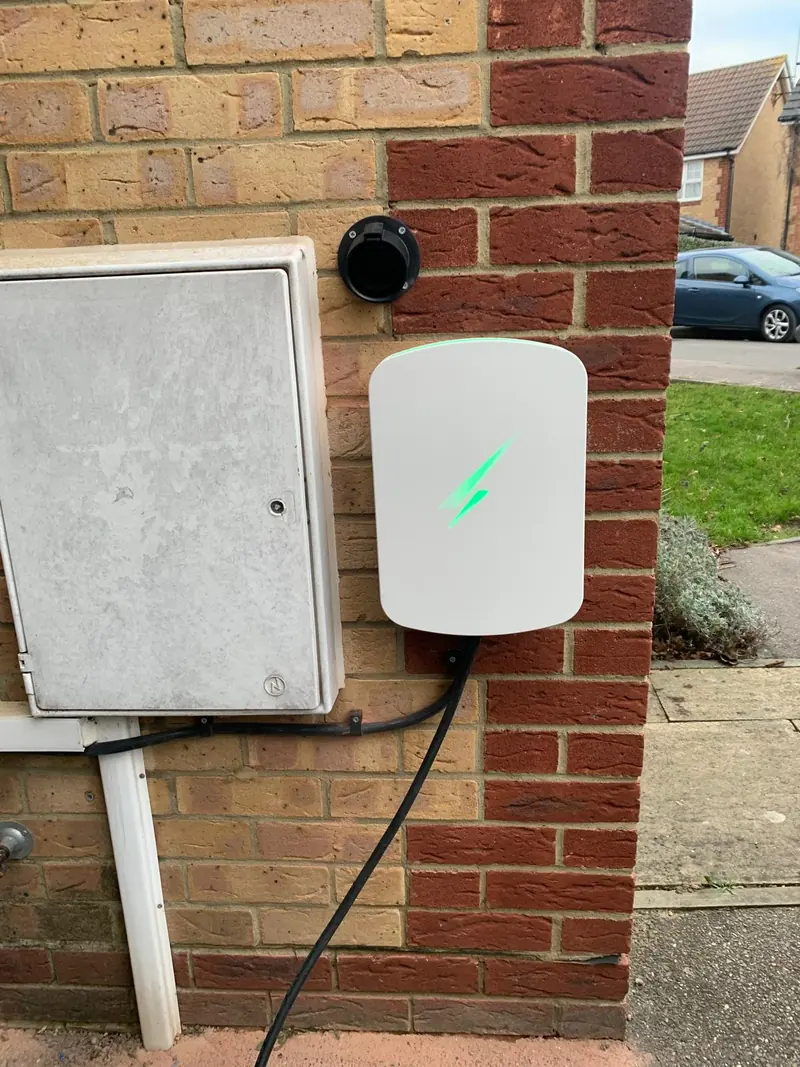
Red brick, beside the meter box
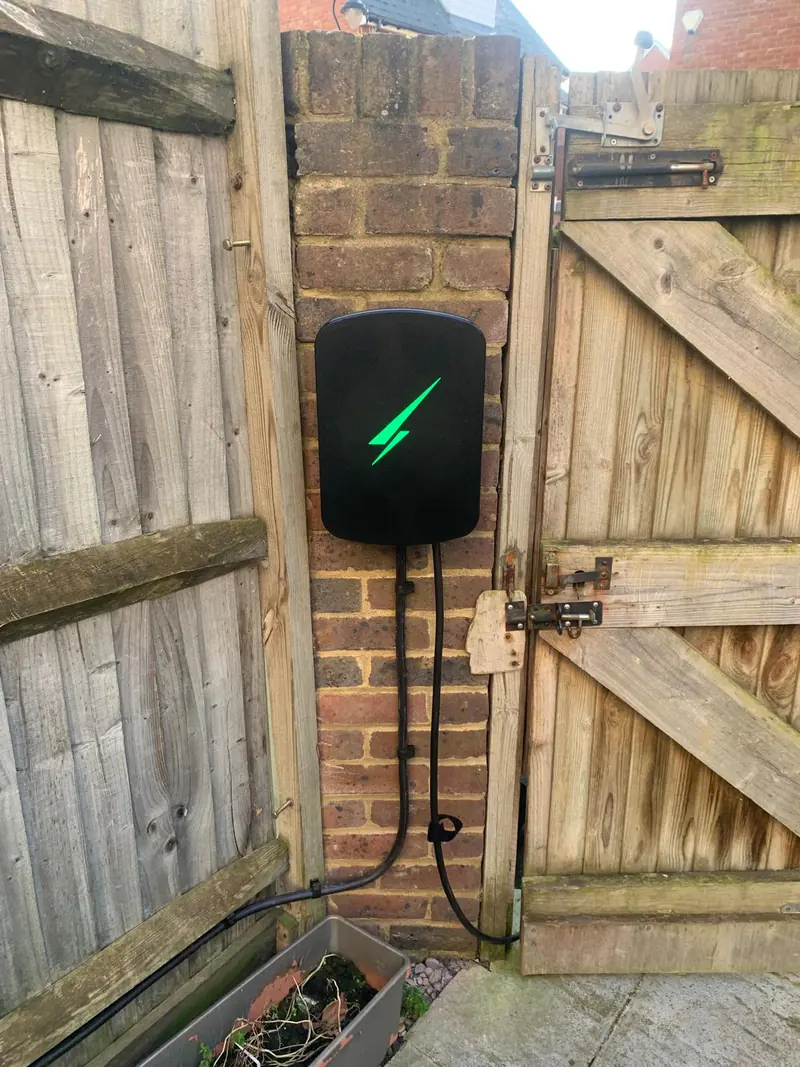
Brick pier between fence and gate
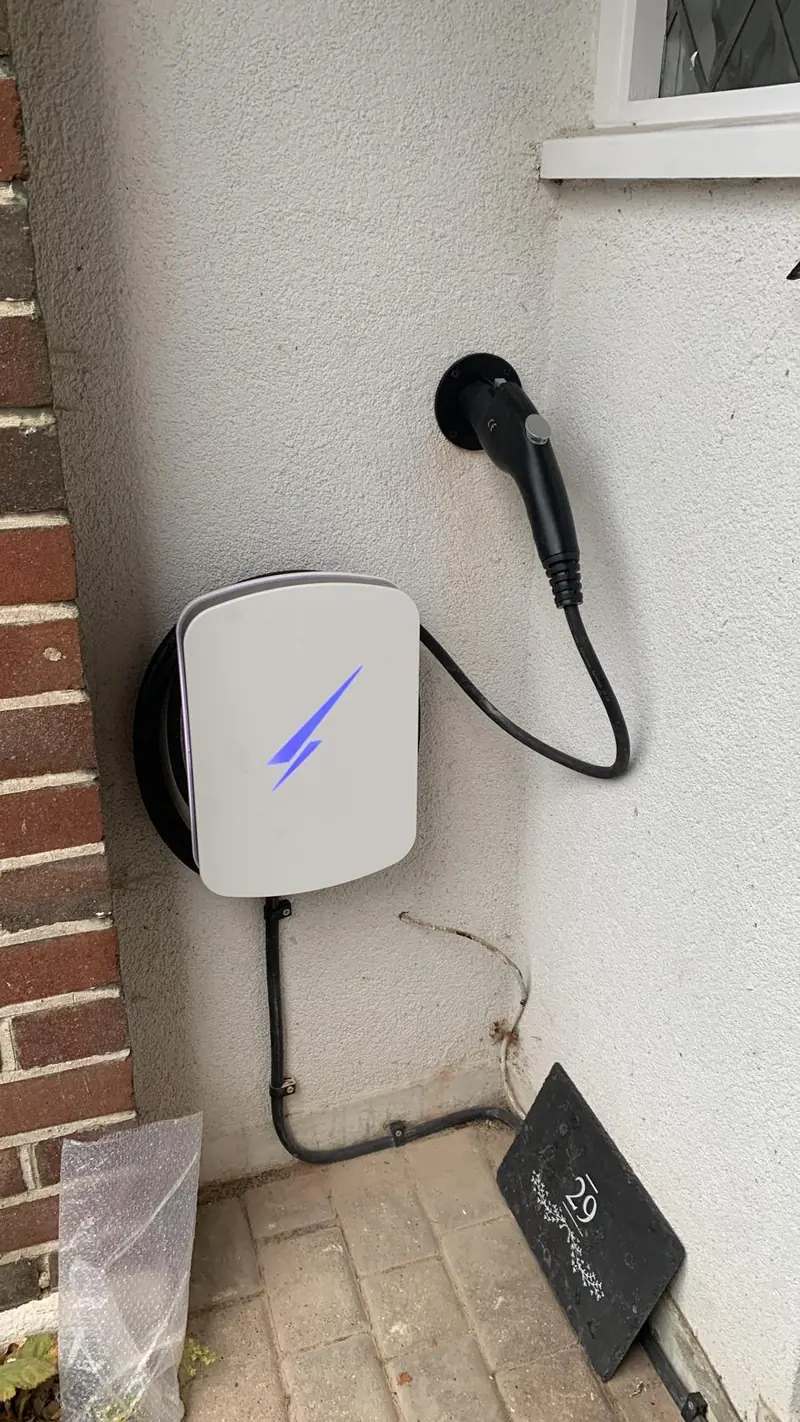
Render, in a side passage
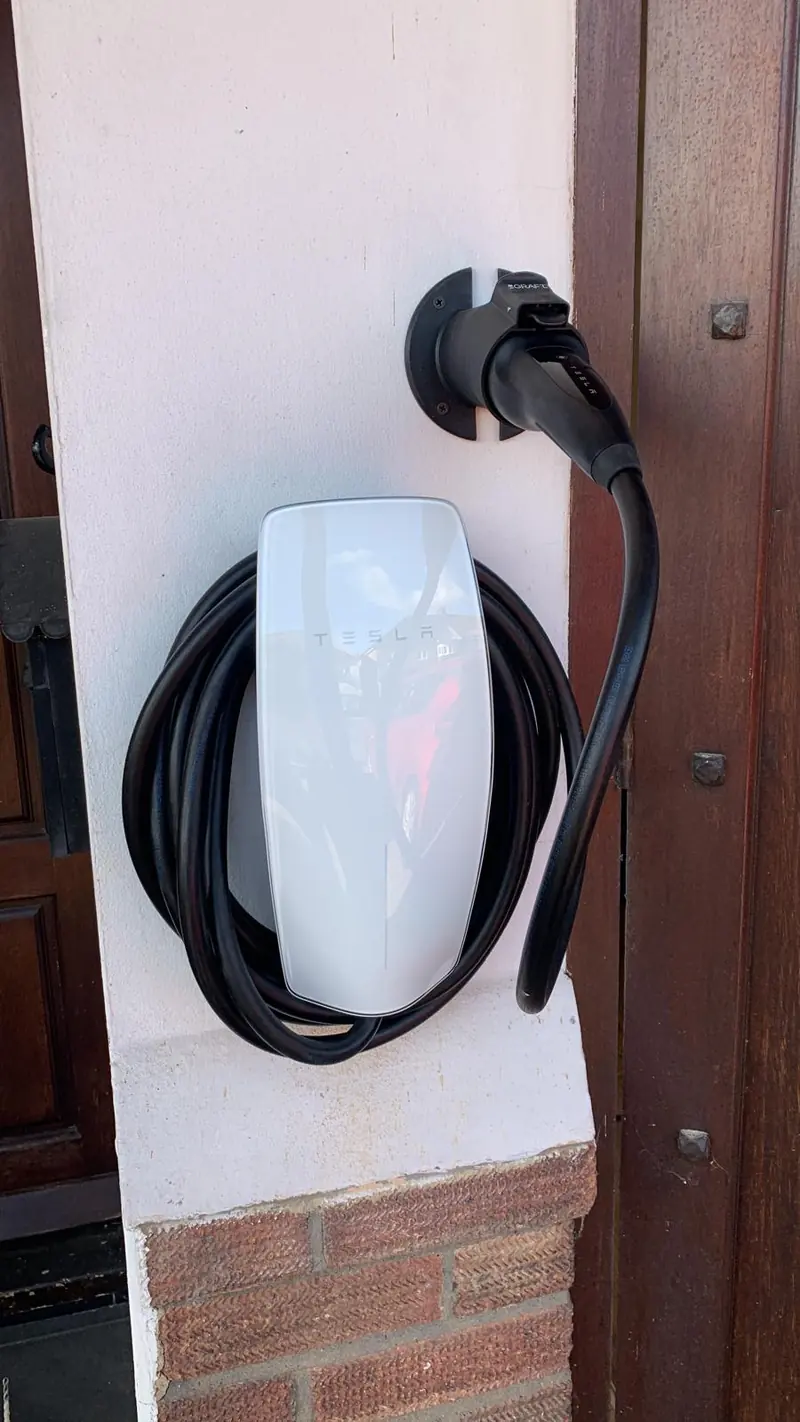
Painted pillar by a front door
The job behind the charger
A home charger is the most visible thing on the wall and the least of the work. It draws a heavy current for hours at a time, which is a different kind of load from anything else in the house, so the job starts with the supply: the size of the main fuse, what is already drawing on it, and the earthing arrangement the network provides, because BS 7671 has a section of its own for charging points and the earthing decides what protection the charger circuit needs. Then comes the route. The cable runs from the consumer unit, or from a small dedicated board like the one at the top of this page, to the charger, and how it gets there decides how the finished job looks: clipped straight along the brick, in conduit dropped from above, through a wall and out behind a pier. The charger goes on its own circuit with its own protection and a means of isolating it. It is tested, set up, and because a new circuit is notifiable under Part P, the work is notified to Building Control and a compliance certificate follows. Every charger sold for a home in Great Britain is a smart charger, so it can be set to charge at off-peak times.
The rules, briefly
Every home charger sold in Great Britain has to be a smart charger.
Source: GOV.UK, Electric vehicle smart charge points
A charger on a new circuit is notifiable under Part P of the Building Regulations. As a NICEIC Domestic Installer, J D Kent Electrical can notify Building Control of notifiable work such as a new circuit.
Source: legislation.gov.uk, Building Regulations 2010 reg 12
Part S covers new buildings and major renovations, not a charger added to an existing home.
Source: GOV.UK, Approved Document S: frequently asked questions
EV charger questions
Does a home charger have to be a smart charger?
Yes. Every home charger sold in Great Britain has to be a smart charger, under the Electric Vehicles (Smart Charge Points) Regulations 2021, in force since 30 June 2022.
Does fitting a charger need Building Control?
A charger on its own new circuit is notifiable work under Part P. As a NICEIC Domestic Installer, J D Kent Electrical can notify Building Control of notifiable work such as a new circuit, and the compliance certificate follows.
Does Part S apply to my house?
No. Approved Document S covers new buildings, changes of use and major renovations. It does not apply to adding a charger to an existing home.